

Case study: Monitoring and Improving Indoor Air Quality with Limited Resources
Photo by Tom Krach on Unsplash
For small business, health and social welfare organisations and other resource-limited groups, indoor air quality (IAQ) is often not a high priority, despite its importance to the health and wellness of staff and visitors. This case study explores accessible, budget-conscious solutions for these operators.
Nature of the problem
A UK study of hospitality venue operators found that many may not fully understand the importance of ventilation for reducing infection risks from COVID-19, often prioritizing hand sanitizers and other hygiene measures. The study also highlighted operators’ limited resources, knowledge, competing priorities, and lack of authority to modify building infrastructure.
As these limitations are common to operators of many small and medium sized organizations, solutions for improving IAQ must be low-cost, realistic, and practicable.

Photo by Bench Accounting on Unsplash
Overcoming resource constraints and using creative solutions
A supply of sufficient outside air is required to maintain good indoor air quality (IAQ) by removing infectious aerosols and other indoor pollutants such as carbon dioxide (CO₂), volatile organic compounds (VOCs) and other biological contaminants. As such, the ability to quantify ventilation quality is a strong step in monitoring IAQ and subsequently improving it.
Ventilation quality for an indoor space can be measured, but it requires instrumentation and qualified personnel to use them. Generally speaking, CO₂ concentrations from respiration are used as a proxy for ventilation rates for occupied spaces.
Because CO₂ is easy to measure and directly linked to human presence, it serves as a practical benchmark for ventilation quality. High CO₂ levels suggest that the air isn’t being refreshed quickly enough, which can also mean that other indoor pollutants (like volatile organic compounds or airborne viruses) may linger longer.
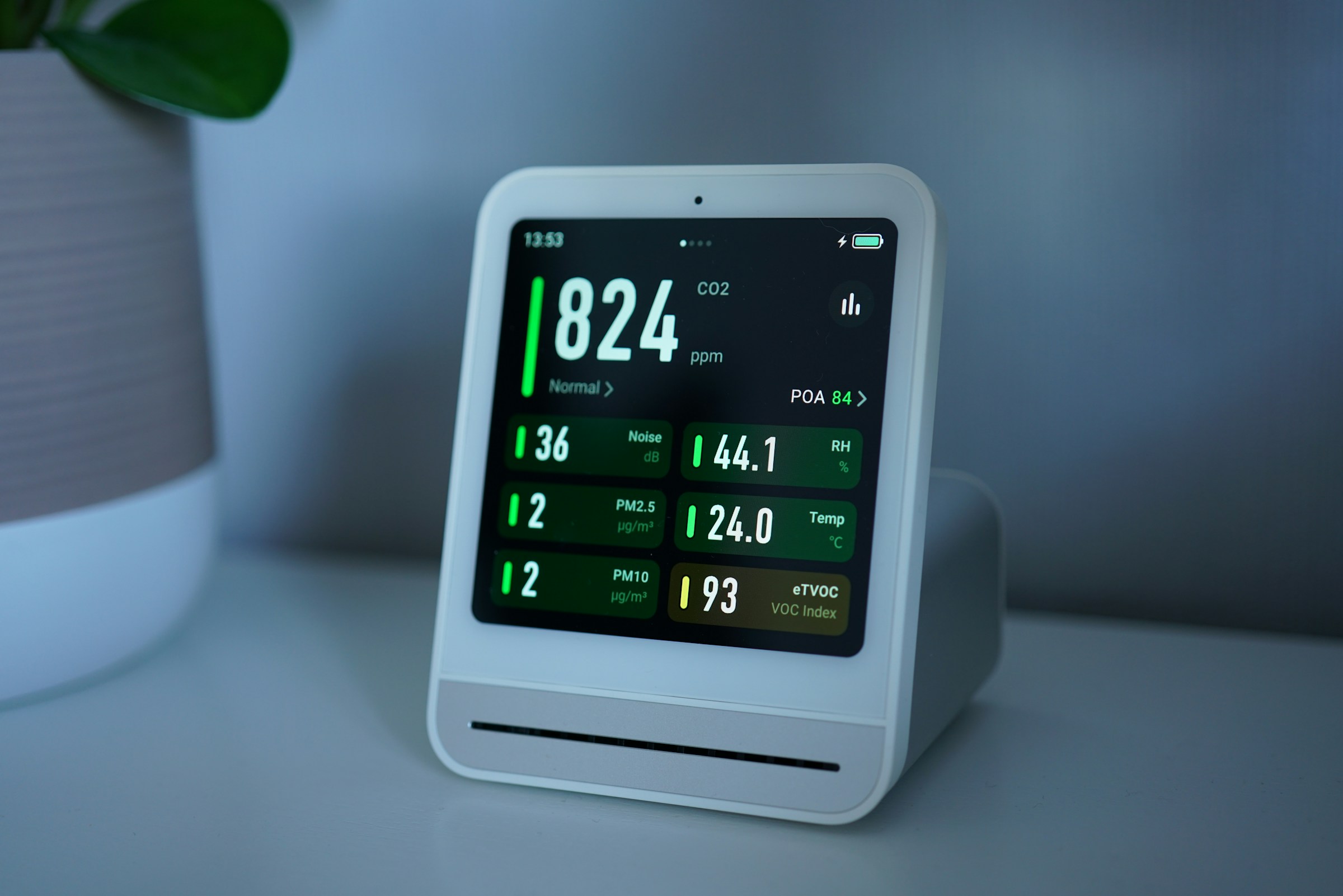
In addition, CO2 is a basic pollutant which is relatively inexpensive to monitor with commercially available air monitors along with basic data like temperature and humidity.Therefore, using commercial off-the-shelf sensors that provide easy-to-understand data presents a viable path forward for improving IAQ in resource-constrained spaces.

Practical examples
For example, a 2024 German study using Internet of Things combined sensors at around HK$450 (€50) and a main data processing station at HK$450 (€50) to create a system at relatively low cost to measure temperature and humidity on an ongoing basis to preserve thermal comfort in an office environment with five different office rooms and sensors.
A 2021 Australian study which attempted to use CO₂ monitoring to assess ventilation quality in indoor spaces used a set of 20 sensors and one base station with wireless connectivity capability which cost around HK$51,000 Hong Kong Dollars (AU$10,000).
At the time of writing, commercially available, consumer level sensors with CO₂ monitoring capability without wireless or internet connectivity are available for below HK$500.
The UK study also found that business owners reported taking more actions to ventilate their venues, like opening windows and switching on wall mounted fans, as well as increased willingness to further invest in air cleaners or mechanical ventilation equipment after being provided with CO2 monitors.
Overall, even a limited investment in air quality monitoring can significantly improve IAQ through operator behavioural changes, reducing the need for costly investments in professional-grade monitors, air purification equipment, or building retrofits.
Citations
Geck, C. C., Alsaad, H., Voelker, C., & Smarsly, K. (2024). Personalized low-cost thermal comfort monitoring using IOT Technologies. Indoor Environments, 1(4), 100048. https://doi.org/10.1016/j.indenv.2024.100048
De-Ville, S., Pott, S., Wood, C., Peng, Z., Farooq, M. Z., Blouchou, G., Suhag, A., Murphy, E., & Hathway, E. A. (2025a). Improving hospitality venue ventilation via behavioural change as a response to the COVID-19 pandemic. Indoor Environments, 2(2), 100097. https://doi.org/10.1016/j.indenv.2025.100097
McGarry, P., Morawska, L., Lekamge, S. A., & Witts, S. (2025). Addressing actual and community expectations on CO2 concentrations within indoor spaces – A reasonably practicable methodology using CO2 concentration to assess ventilation quality to indoor spaces. Indoor Environments, 2(3), 100101. https://doi.org/10.1016/j.indenv.2025.100101