

Case study: Indoor Air Quality Management and Data Transparency in public transport
Public transportation, especially rail, is a major microenvironment for exposure to indoor air pollutants. In Hong Kong, MTR ridership is over 5.5 million per day. While in South Korea’s Seoul, ridership averages over 6.6 million per day. By monitoring and managing air quality in such places, we can gain knowledge and reduce negative health impacts for a significant portion of society.
South Korea as a positive example
South Korea’s urban subway networks, including Seoul Metro and Busan Subway, manage IAQ in challenging conditions characterized by high passenger density and underground constraint. As of 2025, Seoul metro has deployed over 840 air quality sensors across 277 stations and plans to install an additional 4432 air purifiers to further enhance IAQ.
This management strategy combines two key approaches: direct technical solutions and public data disclosure.
1. Direct Management: Technical and engineering solutions are used to directly mitigate pollutants. Air purification data is centralized into building management systems responsible for dynamic ventilation adjustments enhancing fresh air supply during peak pollutant or passenger loads. Additional measures like platform screen doors and proactive air purifiers mitigate particulate buildup.
2. Disclosure and Transparency: A systemic approach to IAQ management
includes interactive public data sharing to reinforce occupant confidence and wellbeing, raise awareness of air quality issues and enable commuters to make informed decisions.
Widespread fixed IAQ sensors track PM2.5, PM10, CO2, temperature, and humidity across stations and train cars. Information is shared via passenger-facing information displays in stations and mobile app alerts improve transparency and encourage health-conscious behavior. Regular audits and disclosure ensure alignment with the nation’s Indoor Environment Management System regulations for underground facilities.
Click here to see the indoor air quality management information network in South Korea- https://www.inair.or.kr/info/
The UK example
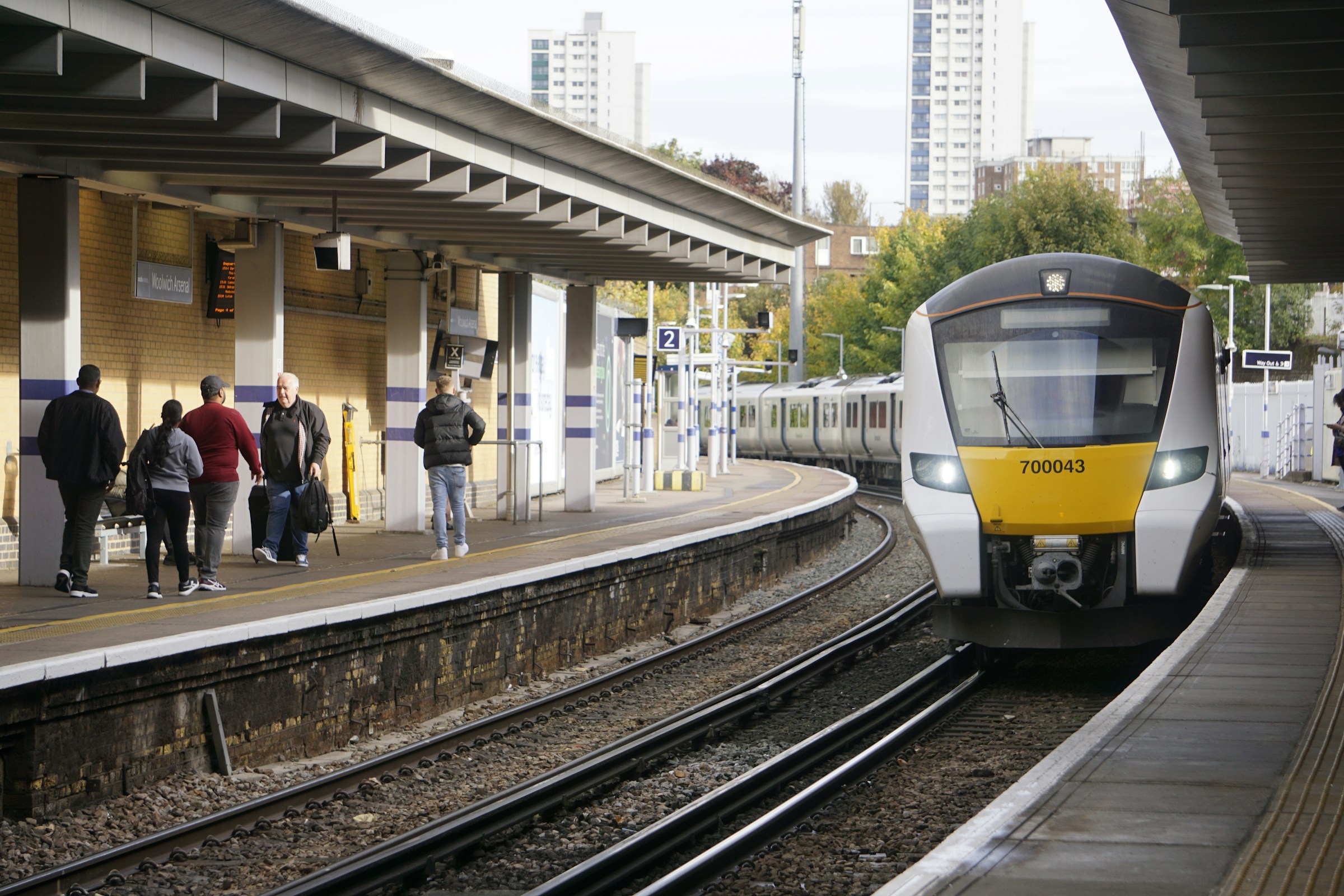
In the UK, the Air Quality Monitoring Network (AQMN) was launched in 2022 to monitor indoor air quality at rail stations in England, Scotland and Wales, covering 75 stations as of 2025.
Nitrogen dioxide (NO2) and particulate matter (PM10 and PM2.5) data is collected and used to ensure air quality at individual stations does not fall below UK air quality standards and enforce contractual obligations with station operators.

Reflection
Due to the high number of users, the cumulative exposure time of ridership on rail lines in densely populated urban areas like Hong Kong is very high, presenting a high economy of scale opportunity to improve public health by monitoring and managing exposure of millions of citizens to various air pollutants in their daily lives.
Publication of air quality data is a first step towards understanding the scale of the issue and gathering information to create a picture of the problem and making fact based decisions to tackle IAQ on public transportation.
Citations
Dons, E., Panis, L.I., Van Poppel, M., Theunis, J., Willems, H., Torfs, R. and Wets, G., 2011. Impact of time–activity patterns on personal exposure to black carbon. Atmospheric Environment, 45(21), pp.3594-3602.